
What are your tenant rights in the Netherlands?
What are your rights as a tenant in the Netherlands? Learn about the Dutch rental law, indefinite rental contracts, and evictions with our guide.

Ivandzhelin
As a tenant in the Netherlands, you're protected by law from your first day in a rental, with capped rent increases, a strict deposit return window, and eviction rules that always require a judge's approval, no matter what your contract says. Dutch rental law protects you with strict rental regulations, deposit protections, and strong eviction safeguards. Understanding your tenant rights in the Netherlands, from maintenance duties to rent increases, will help you enjoy worry-free renting. Let's break down the key tenant protections to help you understand your rights as a renter.
If you're planning your move, it's smart to build a realistic monthly budget for the Netherlands before you sign anything. For those still deciding, you can also get a real feel for what life in the Netherlands is like.
Key takeaways:
- Your rights apply automatically, even if your rental agreement doesn't mention them, and a landlord can't sign them away.
- For students: fixed-term and campus contracts are still allowed as an exception, but you keep full protection against illegal eviction and unfair rent increases while your contract runs.
- For young professionals and expats: liberalised (private sector) rent has no cap on the starting price, but annual increases are capped at 4.4% in 2026.
- Your deposit is usually 1-2 months' rent and must be returned within 14 days of moving out, or your landlord has to explain any deduction in writing.
- A landlord can never evict you without a court order, even mid-dispute.
- If a landlord won't fix something or hikes your rent unfairly, the Huurcommissie (Rent Tribunal) can force a binding decision for a €25 fee.
Your core rights as a tenant in the Netherlands
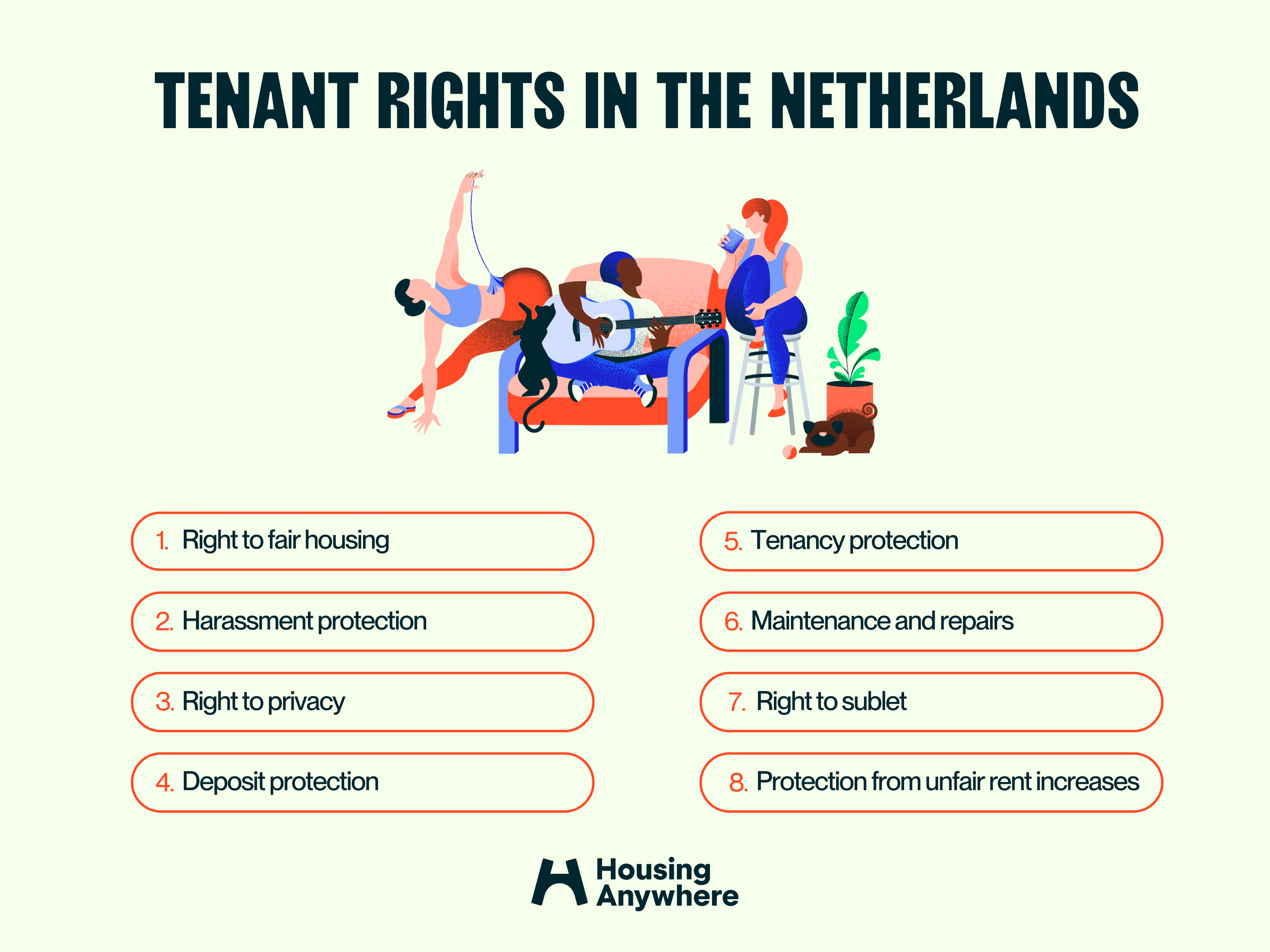
As a tenant in the Netherlands, you're entitled to important rights, even if they aren't explicitly mentioned in your rental agreement. Under the Dutch rental law, your rights include:
Right to fair housing
The right to fair housing ensures everyone has equal access to safe, affordable, decent housing. When renting out properties, landlords can't discriminate based on factors like nationality, race, religion, or gender.
The selection process needs to be clear and transparent. Landlords or property agents can't ask you to disclose personal information such as ethnic background, sexual orientation, religious identity, political preference, or physical/mental health.
Protection against harassment and retaliation
Landlords can't make unreasonable demands, frequently enter the property without notice, or use intimidation to force you to leave the property. Additionally, landlords are prohibited from retaliating against tenants for exercising their legal rights, like disputing unfair rent increases or reporting maintenance issues.
Right to privacy
Dutch rental law prohibits landlords from entering the property while you're renting it without your prior consent, except in emergencies. They must give proper notice if they need to access the property for repairs or inspections.
Tenancy protection
According to tenant rights in the Netherlands, renters with indefinite rental contracts are protected against lease termination. Your landlord can't end the lease without a valid reason. Regardless of whether you're renting an apartment, house, or just a room, the rental protection applies to you. Rental protections also extend to the people you're living with, be it a roommate or a partner.
Right to sublet and host guests
Tenants may sublet their property, but only with the landlord's permission. Unauthorized subletting can lead to eviction. Hosting a friend or family member for a short stay is different from subletting: occasional guests generally don't need the landlord's sign-off, but if someone moves in and starts paying you rent or splitting bills long-term, that counts as subletting and needs written permission first.
Protections from unfair rent increases
Tenants are protected from excessive annual rent increases. Landlords must follow government guidelines, and increases must be reasonable and announced in writing. Check the exact 2026 caps for your rent segment further down this guide.
Rental agreements and contract types in the Netherlands
One of your tenant rights in the Netherlands is to have a written rental agreement that outlines your rights and obligations regarding the property. A rental contract in the Netherlands typically includes:
- Names and signatures
- Monthly rent and payment terms
- Security deposit amount
- Rent increases
- Property description and inventory
- Start and end dates of the lease
- House rules
- Utilities and extra costs (if applicable)
- Landlord responsibilities
- Notice period for termination of the lease
If your utilities or service costs are included in the rent, the rental agreement has to breakdown the additional charges.
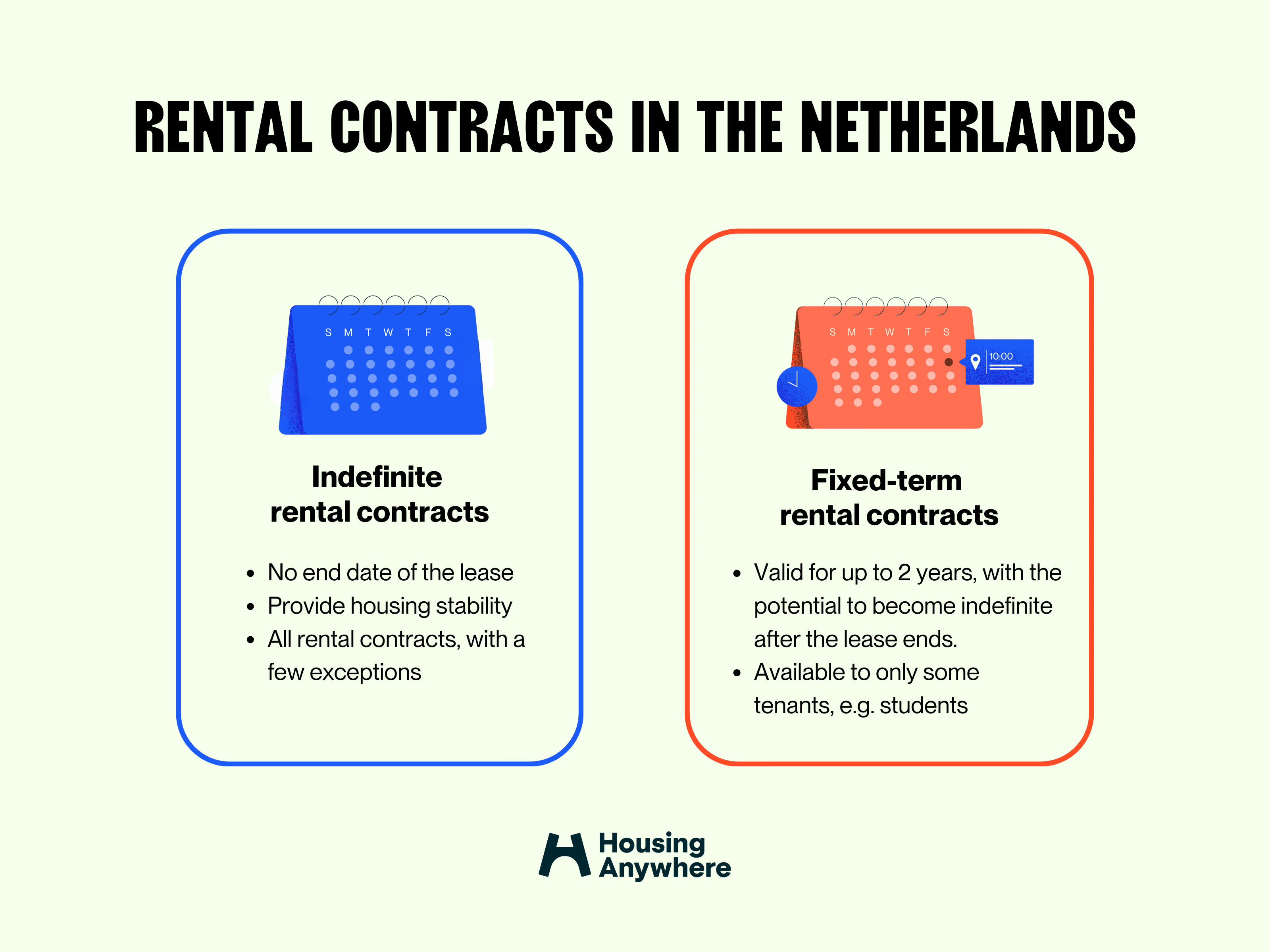
There are 2 types of rental contracts in the Netherlands: indefinite and fixed. In most cases, you'll be offered an indefinite contract. Here's what makes them different.
Indefinite rental contracts
Since 1 July 2024, tenants can only be offered indefinite rental contracts in the Netherlands, and this rule still applies in 2026. This gives the renter the right to receive a rental contract with no end date. Landlords can't end indefinite contracts without a lawful reason or harass tenants to move out. The rule aims to give tenants fair housing and remove the pressure of having to move out every few years.
Fixed-term rental contracts
Fixed-term contracts have an end date and are often valid for a maximum of 2 years. They can become indefinite after the end of the term. While fixed-term contracts aren't the default anymore, there are some exceptions. You can sign a fixed-term contract if:
- You're a student renting temporarily, including on a campus contract tied to your enrollment, which typically ends once you graduate or leave the program
- You need to live elsewhere while your house is being renovated
- You're moving from social housing or are in a social emergency
- You're a tenant given a second chance after your previous lease was terminated for breaking its terms
For students on a campus contract specifically: the trade-off is that your lease ends automatically once you're no longer enrolled, so factor that into your next move before your final semester.
Security deposits: how much, and how to get yours back
Right to a security deposit
Security deposits in the Netherlands are usually between 1-2 months' rent, and they are returned to you within 14 days of the end of the rental agreement. Security deposits are used to cover any property damages that have occurred as a result of your tenancy and additional service or energy charges.
The landlord has to inform you of the security deposit amount and the conditions under which you'll be refunded the deposit at the end of the tenancy. If the landlord withholds a portion of your security deposit, they must inform you in writing about the costs and return the rest within 30 days.
What to do if your landlord won't return your deposit
Send a formal written demand letter by registered mail first, giving your landlord a clear 14-day deadline to pay or explain any deduction in writing. Keep a copy of your move-out inspection report and photos as evidence.
If the deadline passes with no response, contact the Rent Team (Huurteam) in your city for free advice and mediation with your landlord. If that doesn't resolve it, you can take the case to the Subdistrict Court (Kantonrechter), which has jurisdiction over deposit disputes; the Juridisch Loket offers free legal guidance if you're unsure how to proceed.
What to do when something goes wrong: repairs, disputes, and eviction
Maintenance and repairs
Landlords are responsible for maintaining the property in good condition and carrying out major repairs. Tenants are only responsible for minor repairs, such as replacing light bulbs or maintaining the garden. If landlords neglect their maintenance duties, tenants can request repairs or, in severe cases, request rent reductions.
What to do if my landlord won't fix things in the Netherlands?
Generally, it's best to try to resolve the issue between you and your landlord. But if you've sent a formal repair request and they haven't resolved the problem, you can contact the Rent Team (Huurteam) of your city. This is a free service that offers advice and can negotiate with your landlord on your behalf. If the problem persists, they can file a complaint with the Rent Tribunal (Huurcommissie), which can enforce repairs. You can contact them in other cases as well, such as unfair rent increases and high rent or service charges.
The Huurcommissie issues legally binding decisions for a €25 tenant fee, covering rent level disputes, service charge disagreements, and maintenance complaints, though not deposit disputes, which go through the Subdistrict Court instead.
When can a landlord evict a tenant in the Netherlands?
In the Netherlands, a landlord can only evict a tenant under specific, legally valid circumstances, such as:
- Non-payment of rent
- Breach of contract
- Major renovation or demolition
If a landlord seeks to evict a tenant, the case must go to court, where the tenant has the right to defend their position. Tenants can present their arguments or disputes regarding the eviction in court. Tenants can appeal an eviction in the Netherlands in a higher court.
During the legal process, tenants can't be forcibly evicted without a court order, ensuring they have an opportunity to appeal and have their case reviewed.
Rent control and annual rent increases in the Netherlands
Yes, the Netherlands has a system to control the cost of rental accommodation. Since the Affordable Rent Act took effect in mid-2024, rentals are split into three tiers instead of two, based on the property's Woningwaarderingsstelsel (WWS), also known as the points system.
This system scores a property based on size, facilities, and location to ensure the rent matches the property's value. Your total score determines which of the three tiers you fall into, and each tier has its own rent cap and increase limit.
Rent-controlled (social housing) units
Based on the points system, rent-controlled units (social housing) score up to 143 WWS points and fall under the liberalisation threshold. As of 2026, the rent cap for these units is €932.93 monthly. These properties are typically aimed for low-income tenants and have strict eligibility requirements.
If your monthly base rent is below €932.93 you might be eligible to see how rent allowance works in the Netherlands, which covers a portion of your rent.
Mid-range (middenhuur) units
Mid-range units score between 144 and 186 WWS points, a tier introduced by the Affordable Rent Act to regulate the segment between social and fully private housing. In 2026, base rent for these units falls between €932.93 and €1,228.07 monthly, and landlords must still respect the WWS cap when setting the initial rent. This tier mainly affects private landlords renting out mid-quality apartments and rooms, so check your property's WWS score with the Huurcommissie's free Rent Check tool if you're unsure which tier you're in.
Liberalised (private sector) units
Liberalised units (private sector units) score 187 WWS points or more, meaning landlords are free from government regulation regarding the initial basic rent. These units are more common in the private sector and often cater to higher-income earners or expats. They offer more flexibility in terms of tenancy agreements but come with fewer rent-setting protections than the other two tiers, though annual increases are still capped.
Annual rent increases in 2026
The government regulates annual rent increases across all three tiers, and the cap is tied to inflation and wage growth. Here's what applies in 2026:
| Rent tier | WWS points | 2026 rent range | Max annual increase (2026) | Best for |
|---|---|---|---|---|
| Social (rent-controlled) | Up to 143 | Up to €932.93/month | 4.1% (from 1 July 2026) | Low-income tenants, eligible for rent allowance |
| Mid-range (middenhuur) | 144-186 | €932.93-€1,228.07/month | 6.1% | Tenants wanting regulated rent with more space/quality |
| Liberalised (private sector) | 187+ | Above €1,228.07/month | 4.4% | Expats and professionals wanting flexibility and choice |
Even with the maximum percentage applied, your new rent can never exceed the ceiling set by your unit's WWS points. If a landlord tries to charge more, you can challenge it with the Huurcommissie.
Renting tips
A few simple steps at move-in and move-out protect your deposit and prevent disputes later. Go through this checklist both times you change address:
- Walk through the property with your landlord and note existing damage on a written inspection report; both of you should sign it.
- Take dated photos or a video of every room, including any existing wear and tear.
- Record all meter readings (gas, water, electricity) at the start and end of your tenancy.
- Confirm exactly which keys, fobs, or access cards you receive and hand back.
- Keep copies of your rental contract, deposit payment proof, and any repair requests you've sent.
- Get written confirmation of your deposit amount and the timeline for its return before you sign anything.
Use this arrival checklist for your first weeks in the Netherlands to get started on the essentials after you sign your contract.
Ready to move to the Netherlands? Book your home through HousingAnywhere and complete the entire rental process online before you arrive, so you walk in with a signed contract, a clear deposit policy, and a verified landlord instead of surprises. Under Tenant Protection, your first month's rent is held until 48 hours after move-in, giving you time to confirm the place matches the listing before your money is released.
Frequently asked questions
What are my rights as a tenant in the Netherlands? You're protected against discrimination, harassment, and unlawful entry, and you have rights to a written contract, a capped deposit, regulated rent increases, and protection from eviction without a court order. These rights apply automatically, regardless of what your contract says.
How can I get my rental deposit back in the Netherlands? Your landlord must return your deposit within 14 days of your tenancy ending, or explain and return the remainder within 30 days if they withhold part of it. If they don't, send a formal written demand with a 14-day deadline before escalating to the Huurteam or Subdistrict Court.
Can my landlord increase my rent every year? Yes, but only within the government's annual cap for your rent tier: 4.1% for social housing, 6.1% for mid-range, or 4.4% for liberalised units in 2026. Any increase must also be announced in writing and can't push your rent above your unit's WWS ceiling.
Can I sublet my student room or apartment in the Netherlands? Only with your landlord's written permission. Subletting without approval can lead to eviction, so always get it in writing before you hand your room to anyone else, even temporarily.
What is the Huurcommissie, and how can it help tenants? The Huurcommissie is the Netherlands' independent Rent Tribunal. It issues legally binding decisions on disputes over rent levels, service charges, and maintenance for a €25 tenant fee, though it doesn't handle deposit disputes.
How do I challenge an unfair eviction in the Netherlands? A landlord can't evict you without a court order, so you'll have the chance to defend yourself in court before anything happens. If the court rules against you, you can appeal the decision in a higher court.
This article is for informational purposes only.
Please reach out to content @housinganywhere.com if you have any suggestions or questions about the content on this page. For legal advice or help with specific situations, we recommend you contact the appropriate authorities.
Related articles


In this article
Your core rights as a tenant in the Netherlands
Rental agreements and contract types in the Netherlands
Security deposits: how much, and how to get yours back
What to do when something goes wrong: repairs, disputes, and eviction
Rent control and annual rent increases in the Netherlands
Renting tips
Frequently asked questions
Find your home in the Netherlands
Find accommodation in cities across the Netherlands. Search for your accommodation now!
Start my Search